

Act I — Domesticity, Not Disruption
Chapters 1–2: One instance.yaml source of truth, the March bridge100 meltdown, and console curfew mirrors that verify the Xbox actually went dark.
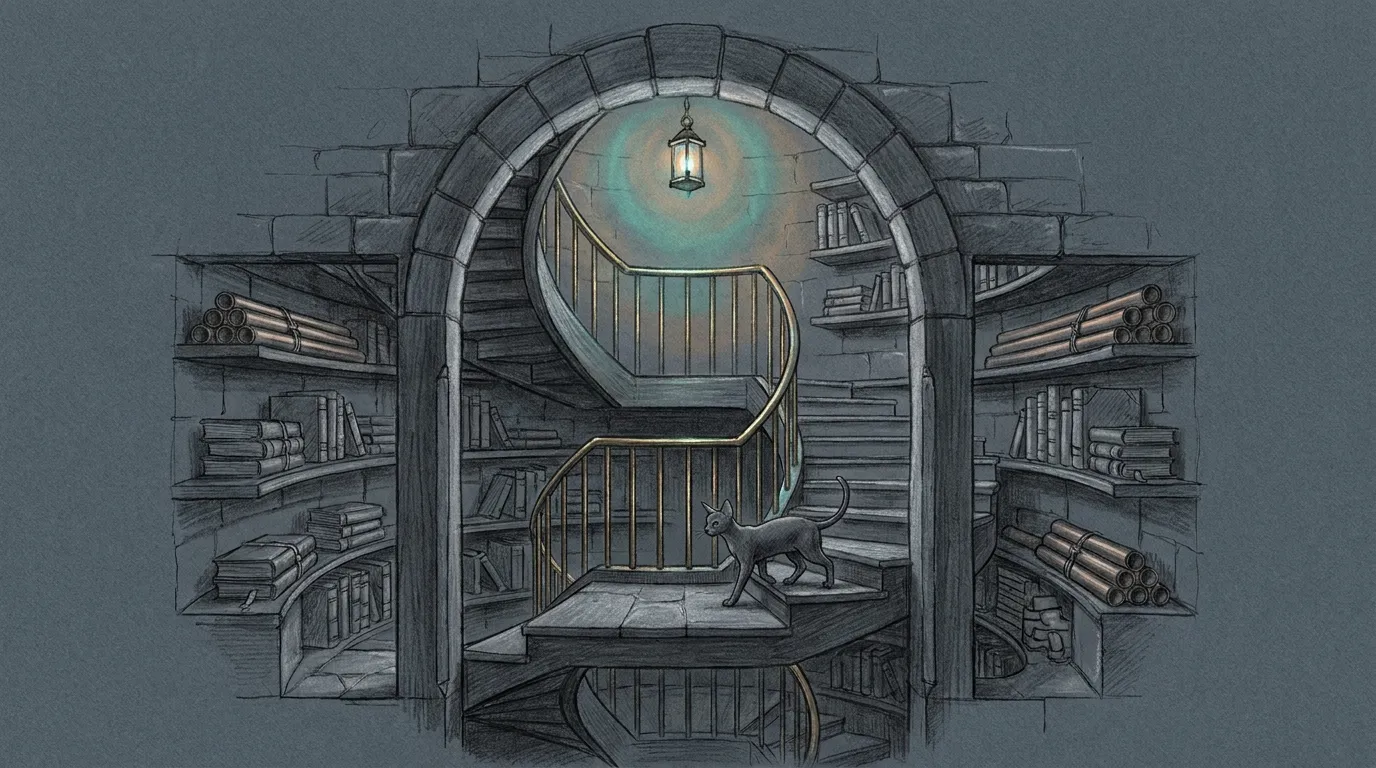
Every unhinged home server empire starts with one sleep-deprived human fixing one annoying Tuesday night. Ours just kept receipts. Over eight months — across 450+ documentation pages, 259 dated field notes, and 558 illustrations — a $600 Mac Mini in a Québec closet, an Ubuntu VM, and two firewalls mutated into a reproducible, self-healing sovereign haus running without per-token cloud meters. (Yes, we know how that sounds. Put down the judgment and grab popcorn.)
This is the six-act highlight reel from the March 2026 bridge100 meltdown straight through November’s five-day Dragon watch. Every act links directly to the architecture blueprints and forensic crime-scene photos on disk, with Castellan, Windu, Cilghal, Qui-Gon, Jocasta, and Tommy supervising the wreckage.
Act I — Domesticity, Not Disruption
Chapters 1–2: One instance.yaml source of truth, the March bridge100 meltdown, and console curfew mirrors that verify the Xbox actually went dark.
Act II — The Machine That Learned Not to Lie
Chapters 3–4: The Pressure Valve trilogy, seventeen days of silent failure, Force Flow (:4077), and R2D2’s 11-layer self-healing ladder.
Act III — The Cathedral Without a Meter
Chapters 5–6: Subscription-first routing, the Smart Router Cathedral (:8055), the post-quantum Memory Vault, and blind pairwise judges that stopped models from grading their own homework.
Act IV — Zero Python, Pure Rust
Chapters 7–8: Dedicated service principals, 3.8 MB Rust PII redaction, post-quantum SSH, and native Metal inference in sanctum-mlx.
Act V — From Fortress to Product
Chapter 9: Portable bootstrap via install.sh, homebrew-sanctum, and sanctum-cli 1.0 (39 commands, 2,800+ tests, Sigstore OIDC-signed releases) under FSL-1.1-Apache-2.0.
Act VI — The Dragon and the Watch
Chapter 10: Training R1, the Three-Brain Council, the 24-hour WA2 closeout, and the five-day soak clearing the gate for Sanctum 1.0.
Mar 2026 May–Jun 2026 Aug–Oct 2026 Nov 2026bridge100 ──▶ R2D2 + Vault ──▶ Rust + PQ-SSH ──▶ Dragon R1& 1 YAML & No-Meter AI & sanctum-cli 5-Day SoakSanctum began in a living room, not a venture-backed pitch deck. As What Is Sanctum? and A Day in the Haus lay out, a modern haushold runs two completely different lives on the same closet silicon: family curfews, lights, and calendars on one side; private work, research, and code on the other.
On 19 March 2026 (9c8640e), the first formal doctrine landed — and three days later the bridge100 cascade immediately stress-tested it with extreme violence. As recorded in The Living Force and Operational History, services restarting blindly against missing dependencies just poured gasoline on outages. Every port, path, agent seat, and schedule moved into one instance.yaml, separating declarative topology from 3 AM folklore.
Nowhere is honesty harder than family screen time — teenagers are basically red-team operators with infinite free time. Under Haus-Control, a curfew command that prints exit zero while Fortnite keeps running is worse than having no rule at all.
That discipline drove the November 2026 console playtime series across Nintendo Switch, Xbox & PlayStation, and More Time. Every mirror reads back vendor or router state directly instead of taking an optimistic button press on faith, while Shared Hardware Identity binds dual-NIC consoles to one target whether they sneak onto Wi-Fi or Ethernet.
April and May taught the haus how self-healing turns into self-sabotage when probes watch the wrong gauge. The first dated field note, 2026-04-07: Provider Overhaul, unified five provider paths and Signal delivery, and two weeks later The Pressure Valve Trilogy logged one hall-of-fame disaster: a midnight kernel panic, a Rust memory daemon shipped by lunch, and that exact daemon assassinating the service it was hired to protect by dinner. (Maximum effort. Wrong target.)
Worse still was Seventeen Days of Silent Failure, where logs proudly printed apply_started for seventeen straight days without ever recording apply_completed, followed by The Eight-Item Sweep that cleared the lingering config and iCloud-sync traps. Principle 8 hardened into granite: verify the physical effect after the action, never the polite exit code of the trigger.
Out of those scars grew a real immune system. Force Flow became the :4077 notification hub so agents never wake an operator with raw JSON vomit, while R2D2 formalized an 11-layer safety stack with cooldowns, circuit breakers, and explicit verification rungs.
Instead of blindly kickstarting dying daemons into infinity, The Ladder That Heals Itself escalates one bounded step at a time and stops cold when state refuses to move. A supervisor smart enough to stop looping is worth ten that look heroic at 03:00.
Most AI stacks default to metered API taxis and mail every family question straight to an external cloud. Subscription First flipped the script: local Metal inference handles everything private first, backed by flat-rate subscription bridges on :3456 (Claude Max) and :6543 (Gemini Ultra).
Standing guard out front, The Smart Router Cathedral on :8055 enforces a five-tier defense ladder across four backends without ever handing raw credentials to downstream agents. Local Cilghal and Windu lanes keep haushold telemetry locked inside the walls.
State and evaluation needed the exact same paranoia. Memory Vault built a git-native :42069 knowledge store across sessions, reinforced in The Post-Quantum Vault Ceremony with X-Wing ML-KEM-768 encryption and documented in Sanctum Vault Armor for before-first-unlock and after-first-unlock APFS boundaries.
In July, The Ruler Was Broken, Not the Model exposed why earlier local benchmarks lied straight to our faces: keyword-echo rubrics rewarded bloated essays over right answers. Swapping self-grading for blind pairwise judges fixed the ruler instead of blaming the weights.
By late summer, hardening moved from shell scripts to OS walls and compiled binaries. Service Principal Wave-1 quarantined daemons under a dedicated sanctum service user instead of letting background jobs roam loose under an interactive operator login.
Next, The Weight of Names: Pure Rust Presidio evicted a 1,450 MB Python NLP monster for a 3.8 MB native Rust binary scrubbing PII in under 1 ms. By October, The Fleet Learned Post-Quantum SSH rolled OpenSSH 10.6p1 with mlkem768x25519-sha256 across ports :2222 and :2223 on every node. (Yes, quantum-resistant SSH for a closet Mac Mini. Windu slept great that night.)
The biggest runtime jump landed in September with Zero-Python AI Across the Estate and Inco Hacks Native: DFlash 2 & SSM Prefix Ladders. Inside sanctum-rs, sanctum-mlx moved model serving, speculative DFlash 2 drafting, SSM prefix caching, and local speech (sanctum-stt and sanctum-tts) onto native Rust and Metal.
Yanking Python out of the hot serving path erased entire species of virtualenv drift and cold-boot surprises. One static binary now feeds both the council and health lanes under hard memory ceilings.
A fortress only its original lunatic can rebuild is a hobby, not a platform. Starting with The Installer the Friend Can Trust and The Wheel That Wouldn’t Move, and culminating in The Fortress That Became a Product, every hardcoded local shortcut gave way to generated manifests and verified symlinks.
Today sanctum-cli ships as Sanctum v1.0.0 (public beta) with 39 commands, over 2,800 passing tests, and keyless Sigstore OIDC release provenance — installed cleanly via sanctum.run/install.sh or homebrew-sanctum. Across the public 1.0 release surface, sanctum-cli and homebrew-sanctum ship under FSL-1.1-Apache-2.0, while sanctum-docs publishes prose and art under CC-BY-4.0 and site code under MIT alongside the consumer-facing sanctum-haus site. Private runtime and operational repositories (sanctum-rs, sanctum-config, sanctum-vault, and Claude_Code) stay cleanly separated from the public 1.0 surface.
Year One closes on the Dragon campaign: training a laser-focused LoRA adapter (R1) specifically for Windu and Cilghal without lobotomizing general fluency. The Dragon and the Heads That Never Forgot caught a float32 decay bug and vaulted exam accuracy from 0.4821 to 0.6741, followed by One Shaft, Two Escapements (permuted 4-bit weights sharing ANE and GPU memory), Two Beats on the Clocktower Spindle (32-token GatedDeltaNet checkpointing for the coder seat), and The Compressor Under the Wrong Indent (lean-ctx convergence across the fleet).
G2 (W-L, 15 Nov): Three Brains and the Twenty-Four-Hour Watch records 02e3937 proving the bare binary alone, retiring a 246-process reflector, and catching three live check defects.WA2, 17 Nov): The Dragon Takes the Seat captures 21:38:10 restart, nine runbook faults caught before and during the window, and the 45-minute long-context gate (7 × 1.0).WA2 closed at 21:39:38 on 18 November with 20 of 20 hourly reads clean (572 requests, 0 errors), followed by 48-hour DG7 and DG5 passes on 19 November and the final five-day soak (DG10) that cleared the v1.0.0 public beta reveal.No tag ships on optimism alone — v1.0.0 (public beta) went live only after the five-day soak finished clean and Wave 4 primary-brain hardening locked into place.
| Path | Best For | Link |
|---|---|---|
| Thematic reading guide | Following one recurring engineering battle end to end | The Arcs |
| Dated timeline index | Looking up specific migrations and early incidents | Operational History |
| Release & 1.0 posture | Tracking remaining Wave 4 and v1.0.0 tag gates |
Roadmap |
| Dragon campaign closeout | Reading the full W-L, Three-Brain Council, and WA2 ledger |
Three Brains and the Twenty-Four-Hour Watch |
| Waves 1–3 EETISMAD & Wave 4 staging | Reviewing the 100-finding security hardening sweep and held primary-brain branch | A Hundred Seams and One Closed Door |
Year One boiled down to one unbreakable law: never trust a green probe that cannot show its receipts. Tommy still keeps vigil beside the Mac Mini in the closet, and every brag in this archive points to a real file on disk you can audit yourself.