

2026-05-20: Three Things That Woke You
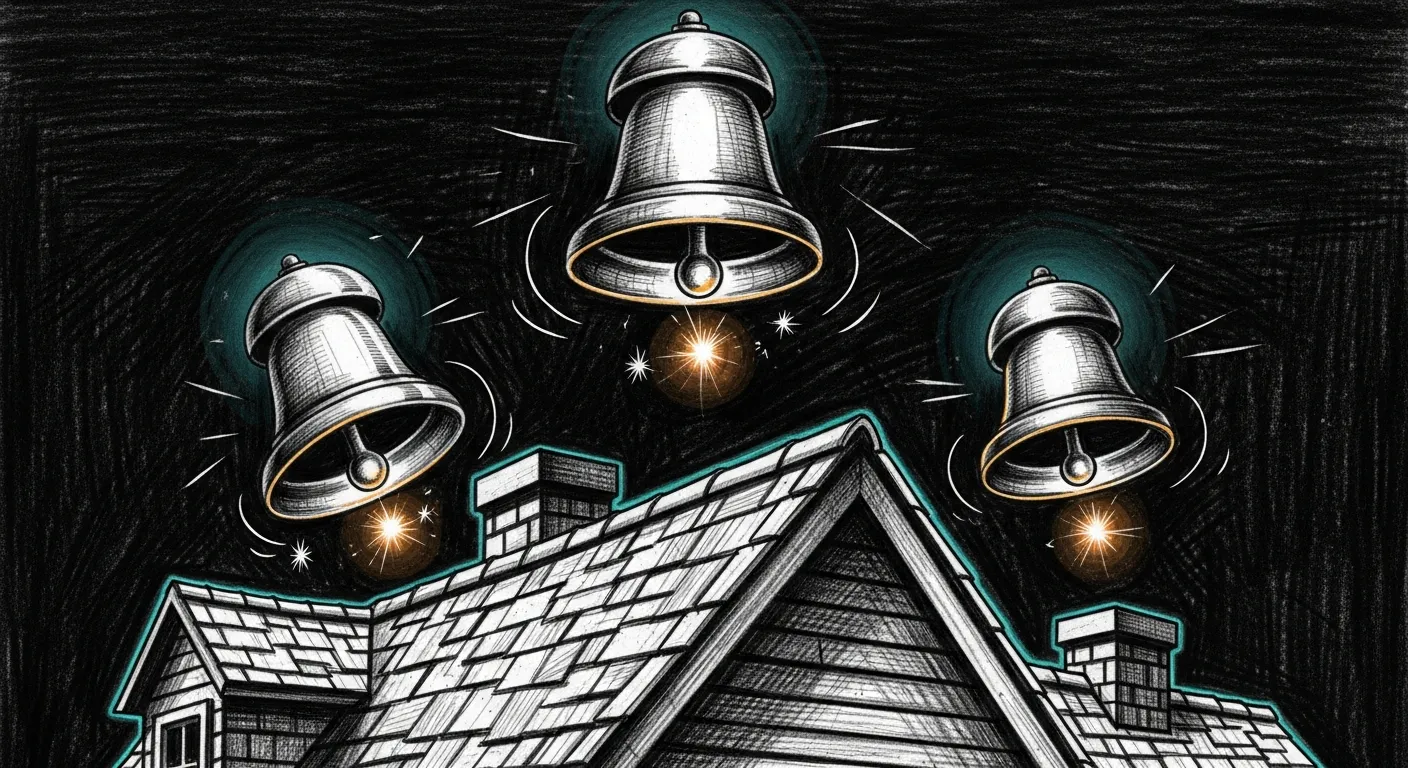
Tommy woke the haus at 6:27 for fifteen years. That was a chosen alarm — an Abyssinian on the chest, an interruption the haus’s guardian picked and the operator forgave. The three things in this sweep woke the operator on a slower, less charming schedule, and nobody had signed up for any of them.
The honest answer to “can sanctum run for months unattended?” was, this morning, “probably weeks.” Most of the long-term failure modes had already been engineered out. Power-cycle recovery was clean — autorestart=1, womp=1, autoLogin=bert, 14 system-domain LaunchDaemons under /Library/LaunchDaemons/ that bring the privileged services back before the user session even starts. TLS certs ran to 2031. The four autohealers (OpenRouter rotate-key, mgmt-key-failover, mlx-drift bootout, SOPS sync) were armed. R2D2 v0.4 was 14 hours into its first soak with 90 chitti heartbeats logged and zero false fires.
So what was the gap? Three small things — none of them outages, all of them periodic — were waking the operator on a roughly weekly cadence. None had been written about because each was independently boring. The sweep that fixed them is interesting because the three problems share a shape: each was a lantern someone had to walk over and light by hand. In the hero sketch there are three of them, and the cat is not stopping. This is the note where they learned to light themselves.
The first lantern: TCC re-prompts every brew upgrade
Section titled “The first lantern: TCC re-prompts every brew upgrade”macOS’s TCC (transparency, consent, and control) framework keys permission grants to the exact executable path of the requesting binary. That is the whole problem in one sentence, and Homebrew steps on it every few days. Each formula installs at a versioned Cellar path:
/opt/homebrew/Cellar/node/25.9.0_2/bin/node/opt/homebrew/Cellar/node/25.9.0_3/bin/node/opt/homebrew/Cellar/node/26.0.0/bin/nodeEvery brew upgrade node produces a new directory. The old binary’s TCC grants are orphaned. The new binary has no grants. The first time anything tries to use it — SanctumBridge wanting iMessage, a python script wanting Calendar — macOS sees a fresh “app” and prompts the operator.
Cadence: roughly every 3–7 days, matching node and python’s update tempo. The TCC database tells the story directly:
$ sqlite3 ~/Library/Application\ Support/com.apple.TCC/TCC.db \ "select distinct client from access where client LIKE '/opt/homebrew/Cellar/%'"/opt/homebrew/Cellar/node/25.4.0/bin/node ← old, grants orphaned/opt/homebrew/Cellar/node/25.6.1_1/bin/node ← old/opt/homebrew/Cellar/node/25.9.0_1/bin/node ← old/opt/homebrew/Cellar/node/25.9.0_2/bin/node ← old/opt/homebrew/Cellar/node/25.9.0_3/bin/node ← old/opt/homebrew/Cellar/node/26.0.0/bin/node ← current/opt/homebrew/Cellar/[email protected]/3.14.3_1/.../python3.14 ← same pattern/opt/homebrew/Cellar/[email protected]/3.14.4/.../python3.14/opt/homebrew/Cellar/[email protected]/3.14.4_1/.../python3.14/opt/homebrew/Cellar/[email protected]/3.14.5/.../python3.14Seven formulas had live TCC entries — node, [email protected], [email protected], [email protected], uv, restic, qemu. All seven got brew pin. The pins stop the upgrade cycle. Manual brew unpin <formula> && brew upgrade <formula> is still available when an actual security patch warrants it, with the knowledge that TCC will re-prompt for that formula’s affected services.
The structural alternative — code-signing each long-running service into an app bundle so TCC keys grants to the bundle ID instead of the executable path — is still on the table for the heaviest TCC consumer (SanctumBridge, which touches iMessage, Calendar, Contacts). It hasn’t shipped yet because the pin alone buys weeks; the bundle wrapper is the right next move when the operator wants to start unpinning regularly. That move eventually became its own note — see TCC Identity Anchors and the day the Allow button was retired. For now, the pin means the dialog stops surprising anyone: the lantern is lit.
The second lantern: SSH that depended on 1Password being unlocked
Section titled “The second lantern: SSH that depended on 1Password being unlocked”The ~/.ssh/config Host * block routes all SSH to the 1Password agent. Convenient when you’re at the keyboard. Inconvenient at 3am, when 1Password has locked itself after N hours of inactivity — at which point the agent denies key requests and every cross-machine sanctum script fails with Permission denied (publickey). A daemon should never depend on the operator being awake and biometric.
There was already a dedicated automation keypair sitting on the Mini at ~/.ssh/sanctum_automation_ed25519 — minted April 23, never wired up. The public key wasn’t in manoir’s authorized_keys. Installing it took thirty seconds:
restrict ssh-ed25519 AAAAC3Nz...EQ6C0 sanctum-automation@mm64-20260423The restrict prefix is the military-grade gate. It drops PTY allocation, port forwarding, agent forwarding, X11, and tunneling. The key can only exec remote commands — which is exactly what daemons need and nothing else. If the key file ever leaks, the blast radius is bounded to “run remote commands as bert with no interactive shell.”
A Host manoir-automation block in ~/.ssh/config, placed above the catch-all Host *, points to the key with IdentityAgent=none and IdentitiesOnly=yes. Three scripts (claude-vault-inbox-check.sh, cathedral-precondition.sh, cathedral-vision-canary.sh) had their default SSH target switched to the new alias. All three still honor their env-var overrides for operator-controlled retargeting.
Smoke test was clean — ssh manoir-automation 'echo ok' returned in ten milliseconds with no biometric, no agent, no DNS dependency. The same private key copied to the MBP will give the MBP-side instance of these scripts the same unattended posture. The 1Password path stays exactly as it was for the human at the keyboard; the daemons just stopped asking the human anything. Second lantern lit — and its sibling lives in The Secrets Trifecta.
The third lantern: log files growing without rotation
Section titled “The third lantern: log files growing without rotation”The third one wouldn’t wake anyone for months, and then it would wake everyone at once. signal-health.log was 14 MB. sanctum-mlx.log (the Yoda cathedral’s stdout/stderr) was 37 MB. watchdog-rust.log, 11 MB. triage.log, 16 MB. yoda-token-minter.log, 13 MB. Nobody had ever rotated them.
Daily-30s of growth × months = gigabytes per file. Eventually the SSD fills, the launchd services start failing with ENOSPC, and the operator wakes up to a cascade.
A small bash script — sanctum-log-rotate.sh — walks ~/.sanctum/logs/ and ~/.openclaw/logs/ once a day at 04:30. Anything above 25 MB rotates to .1.gz. The cascade keeps three historical rotations and drops the oldest. The first manual run rotated five files and reclaimed about 91 MB. signal-health.log’s 14 MB compressed to 734 KB — a 19× ratio, which is what append-only structured-log files typically give you.
Bounded growth is the apple-like part: an unbounded resource is never bounded; the gzip compression is the polish; the cascade-rename (never delete-then-create) is the military-grade part. Even if the rotator crashes mid-cycle, no log content is destroyed. Third lantern lit, and the disk stopped counting down to a 3am ENOSPC.
What stayed quiet
Section titled “What stayed quiet”The other half of an audit is the part where you go looking for fires and find rooms that are already warm. Several latent gaps turned out not to be problems at all:
- TLS certs in
~/.sanctum/certs/expire 2027 (yoda) or 2031 (everything else). Five to eleven years of headroom. - The OpenRouter autoheal stack has dual-redundant mgmt keys with a 24h failover cooldown. The primary has been live since the failover script ran today and swapped the slots; the operator was asked to mint a fresh backup at their convenience but the system is functional without it.
- 14 system-domain LaunchDaemons handle the privileged services. Auto-login plus the dual cathedrals’
KeepAlive=truebrings everything back from a cold power-cycle without operator interaction.
What’s left in the “next time you have a few minutes” queue is small and discretionary: replicate the automation key to the MBP, and consider a code-signed bundle wrapper for SanctumBridge so it survives an eventual brew unpin. Neither wakes anyone. Both belong to the same larger campaign as The Resilience Doctrine — a haus learning to degrade and survive on its own.