

2026-09-13: The zero-plaintext citadel
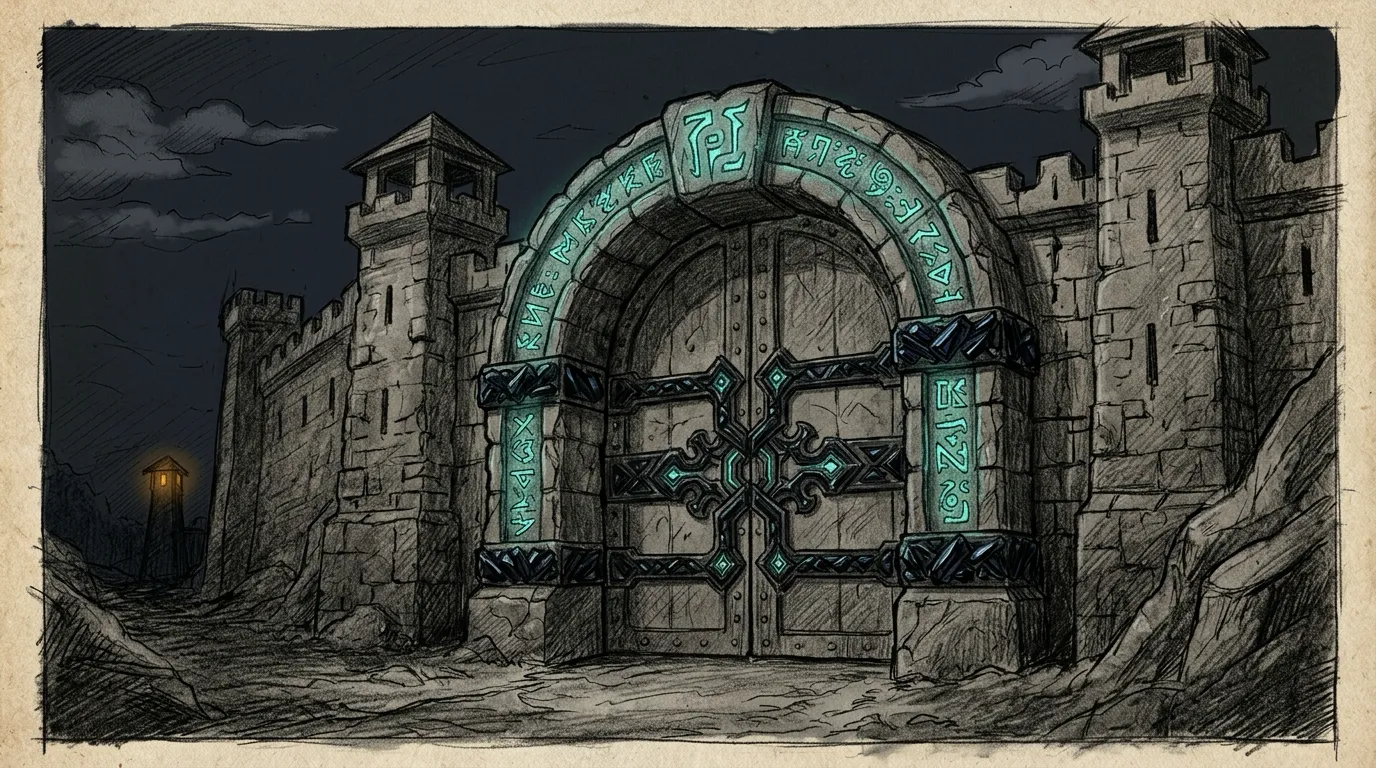
When an architecture tolerates plaintext simply because a socket stays on loopback, it leaves a quiet back door open beside every vault. Neo asked a blunt question during evening rounds. Why run duplicate plaintext ports in parallel with encrypted terminators when our haus could enforce zero-plaintext internal IPC? Plaintext had to go. The answer was to strip the duplicate ports, bind Node backends to POSIX UNIX domain sockets, close every wildcard bind across the estate, and resolve the training hold on the MacBook Pro. Tommy watched the perimeter.
The duplicate port legacy
Section titled “The duplicate port legacy”The estate had accumulated dual-port pairings across several services. Because Node backends originally lacked native post-quantum hybrid TLS, operators had spawned sanctum-pq-terminator proxies on secondary ports while leaving the underlying Node listeners on loopback TCP:
| Service | Legacy Backend Port | Terminator Port | Duplicate State |
|---|---|---|---|
| Command Center | 127.0.0.1:1701 | :1111 | Plaintext loopback TCP exposed on host |
| Health Center | 127.0.0.1:2223 | :2222 | Mismatched .2223 plist naming, duplicate TCP |
| Smart Router | 127.0.0.1:8900 | :8055 (BOSS) | Redundant legacy router port |
The fix was clean. We eliminated loopback TCP binds entirely for internal Node services and bound them to POSIX domain sockets with restrictive permissions (0600, owned by neo:sanctum). No plaintext sockets remained.
sanctum-pq-terminator on :1111 now proxies directly into unix://~/.sanctum/run/command-center.sock. On :2222, the LaunchAgent was renamed from .2223 to haus.sanctum.pq-terminator.2222 and proxies into unix://~/.sanctum/run/health-center.sock. The Smart Router (sanctum-server) moved to :8055, documented in the port summary and smart router guide, while ports :1701, :2223, and :8900 were closed. The council approved the migration.
The military-grade prepper alert bus
Section titled “The military-grade prepper alert bus”Force Flow is the emergency paging bus of the haus, documented in agents. Over 170 operational scripts, watchdog daemons, and tailscale serve target 127.0.0.1:4077. Severing TCP 4077 would have broken third-party and remote alarms. We needed both.
Instead, Force Flow was upgraded to a dual-site listener in force_flow.py:
- TCP Loopback (
127.0.0.1:4077): Preserved for existing caller scripts and Tailscale HTTPS ingress. - POSIX UNIX Domain Socket (
~/.sanctum/run/force-flow.sock): Provisioned with permissions0666for zero-plaintext local IPC. - Prepper Flight Recorder Spool: An asynchronous spool drainer watches
~/.sanctum/force-flow/spool/*.jsonevery 5 seconds. If Force Flow restarts or experiences a panic, alerts spooled directly to disk are guaranteed to be processed upon recovery.
To unify alert generation, the sanctum-notify CLI was deployed to ~/.sanctum/bin/sanctum-notify, delivering through a 3-tier fallback ladder: domain socket first, HTTP loopback second, and atomic JSON spool third. In force_flow.py and screen_time.py, peer recognition was updated so that kernel socket.AF_UNIX callers are recognized as authentic local callers without tripping loopback guards. Alerts never drop. The pipe stays open.
Closing the wildcard binds
Section titled “Closing the wildcard binds”Following the SSH config discovery in The first line wins, a white-box security sweep of all active listening sockets across the Mac Mini revealed three unauthenticated services binding to 0.0.0.0:
- Chi Sentinel (
:7777): Hardcodedaddrs = ["0.0.0.0"]inchi-sentinel.pyleaked system RAM metrics and telemetry over the physical LAN. It now binds strictly to127.0.0.1. - LiveKit Token Minter (
:7337): Bound to0.0.0.0in its launch wrapper, allowing unauthenticated LAN callers to mint LiveKit room tokens. It now binds dynamically to the host Tailscale interface. - Home Assistant Bridge (
:8123): Socat was listening on0.0.0.0:8123. It now binds withbind=10.10.10.1insanctum-bootstrap.sh, restricting proxy access exclusively to the internal virtual machine bridge.
The exposure was real. Our engineers patched each listener immediately.
Simultaneously, cargo audit in the sanctum-rs workspace identified RUSTSEC-2026-0189 (a CVSS 8.8 DNS rebinding vulnerability) in rmcp v0.8.5 within services/memory-vault-mcp. The dependency was upgraded to rmcp 1.8.0 and migrated to the non-exhaustive ServerInfo builder API. The advisory vanished.
Resolving the 64-layer LoRA hold on Apple Silicon
Section titled “Resolving the 64-layer LoRA hold on Apple Silicon”On 2026-07-12, the MacBook Pro training virtualenv had been held at mlx 0.32.0.dev because upgrading to 0.32.0 stable caused full-depth 64-layer LoRA training runs on Qwen3.8-27B-4bit to hang indefinitely before Iteration 1. Qui-Gon kept base models active while our council awaited an upstream resolution. Training had stalled.
Investigation of recent upstream pull requests revealed that multiple padding and attention bugs had since been merged:
- In
ml-explore/mlx:PR #4441(Fix Pad vjp with axes subset),PR #4364(Fix pad negative axes), andPR #4258(Fix int32 overflow in conv padded input). - In
ml-explore/mlx-lm:PR #1467(Fix broadcast crash in quantized SDPA with GQA and batched padding mask) andPR #1824(Read BatchKVCache left padding without reduction kernel).
A sandbox environment was provisioned on the MBP with mlx==0.32.2, mlx-metal==0.32.2, and mlx-lm==0.32.0 (commit dcbcf78). A full forward and backward gradient step on all 64 layers of Qwen3.8-27B-4bit (58,363,904 trainable parameters) evaluated in 9.77 seconds. An end-to-end mlx_lm.lora 2-iteration run completed in 3.55 seconds/step with clean validation passes and adapter saves. Nothing hung. The gradients flowed cleanly. The verified stack was promoted into live production .venv.
A fortified perimeter
Section titled “A fortified perimeter”With duplicate plaintext ports extinguished, our estate runs lean. Sockets enforce kernel-level permissions, terminators require post-quantum handshakes, and the alert bus survives panics through its direct disk spool. The Mac Mini M4 Pro and MacBook Pro M4 Max now operate in lockstep harmony across verified, hardened gates. Tommy and Yoda guard the citadel. All lights are green.