

2026-05-24: msg-bus shipped, signal-cli quietly buried, OrbStack starts hidden at boot
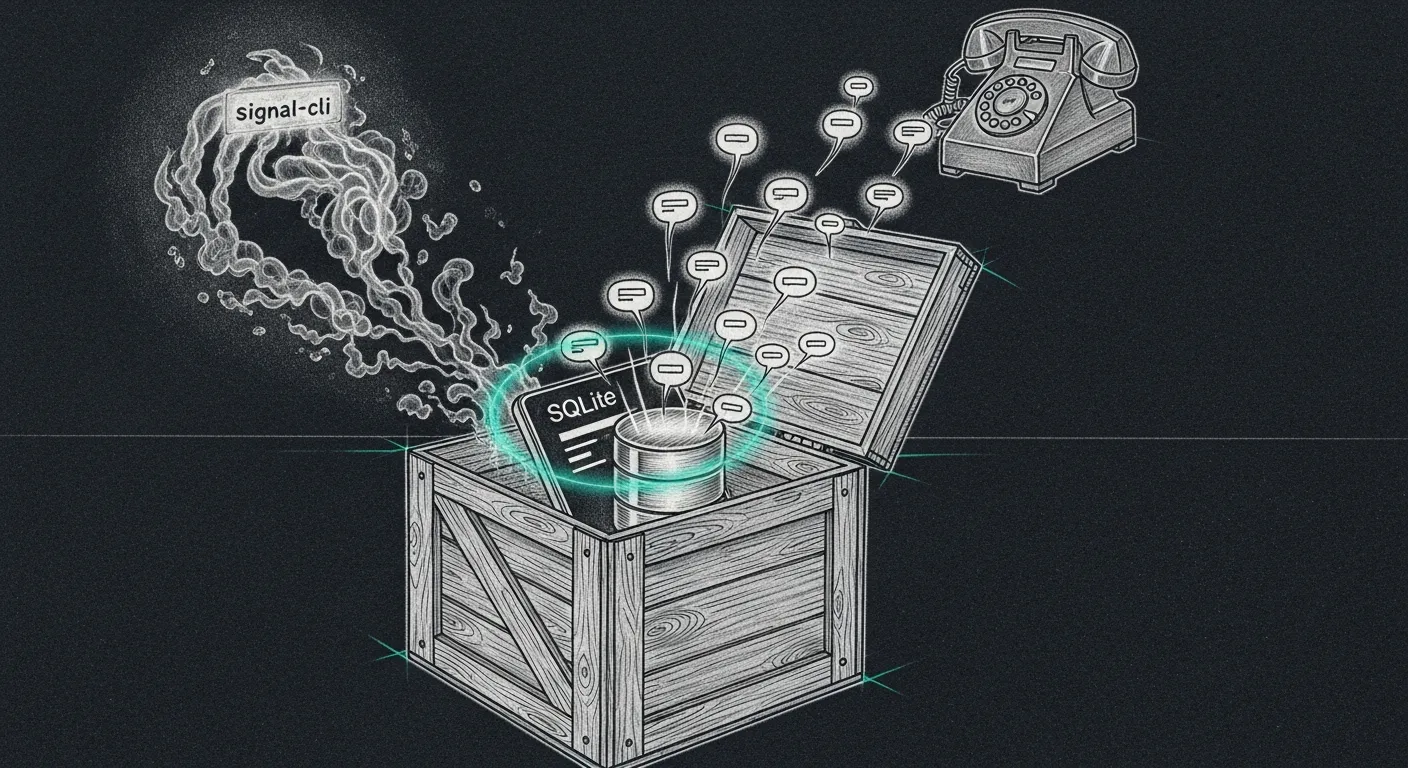
A long afternoon. Three things shipped, two operator-experience improvements landed, and one eight-day silent failure surfaced — which validated the entire project’s thesis better than any spec language could.
msg-bus, end-to-end
Section titled “msg-bus, end-to-end”Phase 1 (foundation: queue + dispatch + three transports + daemon + tests) and Phase 2 (Force Flow cutover: handle_notify routes iphone* / signal / yoda_call through the bus instead of branching per-channel) both landed. The bus runs as com.sanctum.msg-bus on 127.0.0.1:4076, sqlite WAL queue at ~/.sanctum/msg-bus/queue.db, source-of-truth at ~/.sanctum/msg-bus/. Architecture and operator notes in sanctum-msg-bus.
Within an hour of cutover, eleven real iMessages had been delivered through the bus. The first three failed iMessage and recovered via HA-push (TCC permission gap on the launchd-spawned daemon — operator hadn’t granted Automation yet); the eighth onward landed on first attempt after a small IMessageTransport patch that treats osascript-send-success as evidence-of-delivery when chat.db is unreadable. Operator received single iMessage notifications instead of double-notify (iMessage + HA-push fallback).
The patch is the kind that you can only write after the system is in production, because the bug — chat.db stores multi-line / emoji / rich bodies in attributedBody (NSKeyedArchive blob), not text — only surfaces with real human-typed content. The first fixture-based test missed it; the first live message exposed it.
The signal-cli ghost
Section titled “The signal-cli ghost”Investigating spec item §11.7 (the com.sanctum.signal-cli.plist.retired-2026-05-16 mystery) turned up the answer in three seconds: the daemon process isn’t running. Hasn’t been since 2026-05-16. The signal-tcp-bridge LaunchAgent is still up, faithfully pointing at port 8080 where nothing answers. Force Flow’s send_signal calls have been silently dropping for eight days. The only ambient signal was the signal-health.sh sentinel firing the occasional HA-push alert about signal being down — which the operator did receive, but as one of dozens of weekly alerts.
This is the failure mode that motivated the entire msg-bus project. The fact that we found it by operating the bus (not by debugging it) is the strongest possible validation that the architecture catches the bug class it was designed for. Without ack-tracked failover, an unreliable transport doesn’t get noticed; with it, the dispatcher tries the next one and the queue lifecycle records exactly what happened.
The plan calls for keeping Signal as the tertiary transport for redundancy; the dead daemon stays where it is and the bus’s signal transport silent-fails through it cleanly into HA-push. If you ever want to revive Signal, the path is documented in docs/superpowers/specs/2026-05-23-sanctum-msg-reliability-design.md §11.7.
OrbStack: engine at boot, no GUI
Section titled “OrbStack: engine at boot, no GUI”The operator’s framing: “Make sure OrbStack starts hidden, no GUI popup at bootup.”
OrbStack’s own app.start_at_login setting adds OrbStack.app to System Settings → Login Items, and OrbStack.app’s default behavior is to open the Dashboard window on launch. That’s the popup. Even worse, it adds a Dock icon — every time you log in, the app announces itself.
The cleaner answer: a LaunchAgent that runs orbctl start at login. orbctl invokes the OrbStack engine via XPC into the system-level dev.orbstack.OrbStack.privhelper LaunchDaemon. The engine spawns, the Docker socket comes up, and the GUI OrbStack.app never launches. Combined with defaults write dev.kdrag0n.MacVirt global_showMenubarExtra 0 (the menubar icon stays off), the user experience is: log in, Docker works, nothing else changes.
$ cat ~/Library/LaunchAgents/com.sanctum.orbstack-engine-autostart.plist# ...ProgramArguments: /opt/homebrew/bin/orbctl start# RunAtLoad: true, no KeepAlive
$ launchctl print gui/$(id -u)/com.sanctum.orbstack-engine-autostart | grep -E "state|last exit"state = not runninglast exit code = 0
$ orbctl statusRunning
$ pgrep -lf "OrbStack.app/Contents/MacOS/OrbStack$"(nothing — no GUI process)
Retire path: launchctl bootout gui/$(id -u)/com.sanctum.orbstack-engine-autostart + rename the plist .retired-YYYY-MM-DD.
Phone hygiene: “should not be P1”
Section titled “Phone hygiene: “should not be P1””Operator framing while the iMessage flood was happening: “This should not be a P1, put them to review before going to bed.” Force Flow had been pushing every newly-detected MAC on the LAN (“Unknown device on network”) at severity="warn" — which under the post-cutover routing went straight to iMessage. Eleven new-device alerts in ten minutes is not what apple-like looks like.
The fix is one line in screen_time.py:_check_new_devices: severity="warn" → severity="info". severity="info" routes to ["dashboard"] only (or ["log"] in quiet hours). The full device list is still visible in the Holocron dashboard for review whenever the operator wants; no phone interruption. Reserve the buzz for things that actually need response — that’s the doctrine.
The deeper lesson, codified in the commit message: the Phase 2 cutover surfaced what signal-cli had been silently failing to deliver for 8 days. Fix the severity, not the delivery. If a signal is too noisy at the right severity, it was always too noisy — silent-failing was masking the problem, not solving it.
What didn’t ship today, deliberately
Section titled “What didn’t ship today, deliberately”- Phase 3 (Bert ↔ Yoda inbound via
sanctum-msg-bridge) — design done, implementation pending. Needs Yoda’s chat-handler endpoint URL. - Phase 4 (synthetic probes + Holocron
/healthzpanel + jsonl audit log) — sketched in the plan; tackle once Phase 1+2 has bake-in time. - Phase 5 (drills + R2D2 recipes for bus stuck / all-transports-degraded) — same.
- Full TCC grant tour — the daemon runs in FDA-graceful mode today. Granting Full Disk Access + Automation to the pinned canonical Python (
/opt/homebrew/opt/[email protected]/bin/python3.14) upgrades iMessage ack semantics from “send-success only” to truedelivered/readreceipts. Operator’s call when they want pristine. Plan in TCC Identity Anchors.