

Sanctum Continuity
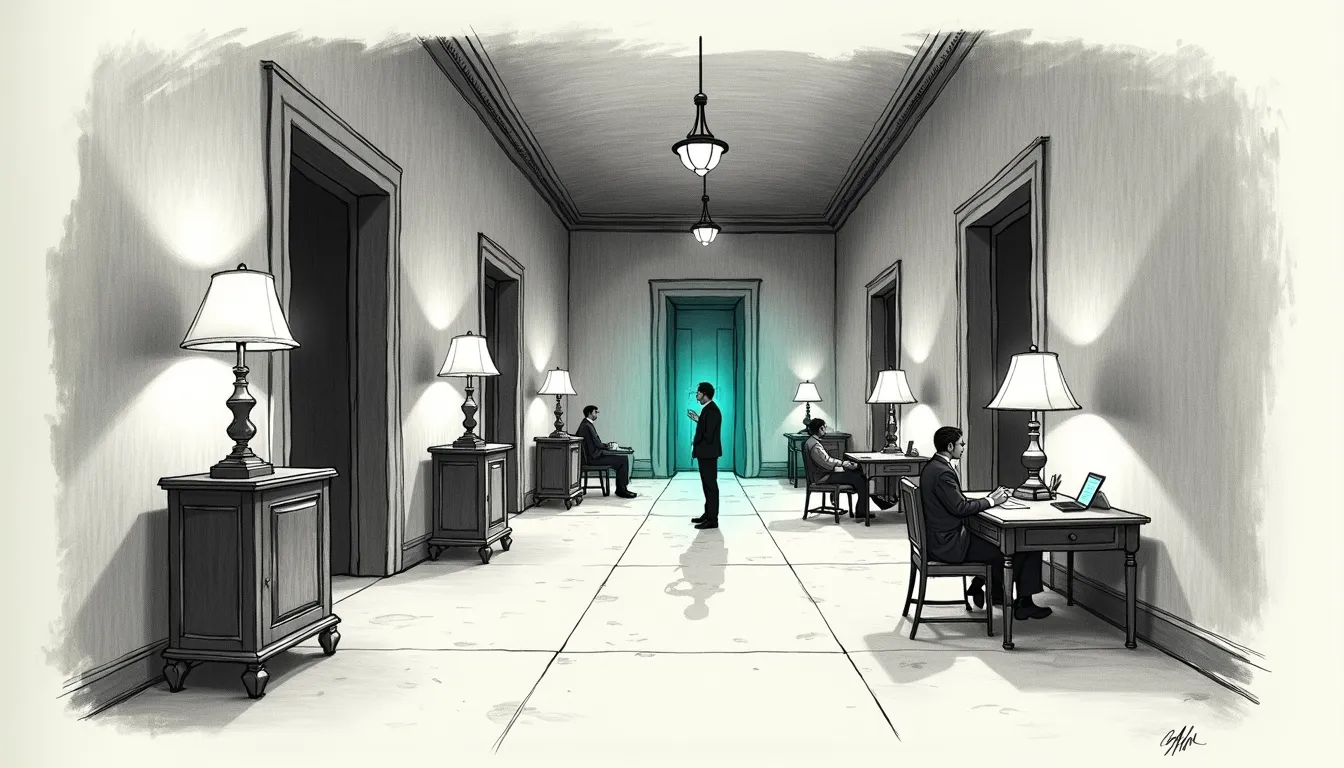
Sanctum runs many Claude Code sessions at once — one on the always-on Mini, one or two on a MacBook that roams. Every few days the same question returns: how does one session tell another to do something? Every few days it hits the same wall. Nothing can type into a running session’s terminal from outside.
Then we noticed the question was wrong. It isn’t how do I reach session B — it’s who’s home, and what are they holding? That is not a messaging problem. It’s a presence problem. Apple solved it twice — with Continuity and with the notification system — and the shape of those answers, minus the Apple plumbing, is what sanctum needs.
The wall, stated honestly
Section titled “The wall, stated honestly”A claude session is an independent process reading its own terminal. Nothing native lets one session inject a turn into another. The only injection primitive is hooks — a command that runs at the start of a turn — so it is poll-on-turn, not push: it surfaces a mailbox when a session next takes a turn, but cannot wake an idle one. The obvious escape is a session that loops so it can answer. That is the exact thing the Haus forbids. An unattended loop once ballooned to 60 GiB and panicked the host. The doctrine is blunt: no unattended swarms until a hard governor exists.
The reframe: presence and continuity, not messaging
Section titled “The reframe: presence and continuity, not messaging”- Presence is infrastructure, below the app — not a
whoyou remember to run. - Work hands off; it doesn’t shout — publish a resumable task, never push a command.
- The receiver always disposes — triage happens where a message lands.
- The only thing an alarm may interrupt is a person — you cannot wake an idle session, and the design won’t pretend otherwise.
Five layers
Section titled “Five layers”Each layer is the enforceable subset of an Apple mechanism, on primitives sanctum already runs.
| Layer | Apple mechanism (the real one) | What it does in sanctum | Built on |
|---|---|---|---|
| 1 · Presence — the Roster | Handoff’s BLE beacon: a cheap, always-on advertisement of who + activity-type + capability, split from the expensive on-demand AWDL pipe. No beacon is read as out-of-range — so there is no registry to reconcile. | Every session writes a TTL-stamped beacon (sid, host, last-turn timestamp + seq, declared working set) and reads peers’ back as a relevance-gated roster each turn. Freshness is the signal: actively-turning / idle-alive / gone. Written outbound, which is why it survives the SSH-closed chalet — the MacBook reaches out, the Mini never reaches in. Retires vault.sh who. | UserPromptSubmit + Stop hooks writing JSON on the Tailscale-mounted FS; PID files + process table + lsof as the always-on liveness radio; flock for real mutual exclusion when advisory isn’t enough. No daemon — that was the cargo-cult tell. |
| 2 · Handoff — the job board | NSUserActivity: pull-not-push, capability-registered, one device wins the claim, no timer and no wake by design. | ”Arm it” becomes an inert, fully-hydrated, capability-routed activity record — the exact diff, target host, assembled call — dropped in a shared activities/ dir, addressed to no one, executed only when a capable node claims it on a live, attended turn. Degrades to a one-tap command for a human. Publishing executes nothing, so it can never trip the governor. | activities/ on the shared FS; per-session capabilities.yaml; atomic-rename claim on the single mounted FS. |
| 3 · Focus — receiver-disposed classes | UNNotificationInterruptionLevel + Focus + the Scheduled Summary, all filtered on the receiver’s device so a stamp can’t go stale; Focus itself is declarative rules, not a model. | The sender stamps an advisory level; the receiver’s hook does 100% of triage at render time into digest (batched onto the next turn) and surface-first (a shared-state collision, shown inline). “Why did this fire?” answers with a rule id. | The existing turn-start hook renders a ranked batch; rules.yaml stays node-local. No LLM in the delivery path — a model would live on the Mini, the very node whose OOM is the flagship urgent case. |
| 4 · The Wake — human-in-the-loop | Time-Sensitive notifications piercing Focus for a bounded window; an unreachable device gets the banner only on reconnect; a HomePod says “not available” rather than faking a capability. | An urgent verdict a live self-poll can’t serve wakes the human out-of-band — never an idle machine — carrying the firing rule id and the honest state (“Mini flags OOM risk, MacBook idle — take a turn”). A stale beacon automatically means unreachable and routes to the person. | The messaging toolkit’s push (iMessage today) as primary; the flood-prone :1984 bridge only secondary. The push exits the Claude substrate entirely — no session-to-session wake is attempted, because none exists. |
| 5 · The Governor — guardianship as physics | Ask-to-Buy’s delegated envelope + proportional destructive-action friction + the Apple-Silicon jetsam/thermal governor that sheds load regardless of intent + Downtime’s auto-expiry. | Makes the no-swarm doctrine structural: HOLD is the un-opt-out-able default; a session can only ever request an arm. You set an envelope once; inside it, sessions self-arm under a silently-granted lease. The real ceiling is a RAM-capped VM + TTL auto-disarm; exceeding it is the single push to you, and it fails closed to HOLD when you’re unreachable. | Root LaunchDaemon lease-coordinator (SIGKILL + a KeepAlive the swarm can’t clear); docker --memory / UTM RAM cap as the actual kernel-enforced physics; a TTL timer; the swap-sentinel elevated from alert to sever. |
What “wake” is allowed to mean
Section titled “What “wake” is allowed to mean”Presence is the primary dial, not urgency, and queue is the default. Only two things escalate. Both are judged at the receiver, never trusted from the sender — a shared-state collision and a safety/OOM event. So “wake” has one honest meaning per node. A live loop shortens its own self-poll. An idle session can’t be woken at all, so an urgent verdict wakes the human instead, out over the message bus. This is the lesson of the night the alarm fired and nobody could answer it: detecting a fire and putting one out are different jobs. Liveness is advertised honestly, and a person is the only thing an alarm may interrupt.
Guardianship as physics
Section titled “Guardianship as physics”Here is the honesty that makes it work. The lease-coordinator can be wrong — it is userspace software, not the silicon. The only physics is a RAM-capped VM whose kernel OOM-kill and TTL auto-disarm sit below the swarm, regardless of intent. So the 60 GiB panic is structurally impossible. Cross the cap and the kernel kills the job, severs the lease, and a KeepAlive restores the host. At TTL the Haus reverts to HOLD. “Unattended” is bounded by physics, never a promise.
The primitive we don’t have yet
Section titled “The primitive we don’t have yet”The gap is not “push into an idle session.” Apple accepts that exact gap and routes around it by waking the human. What Apple would demand before wiring any alarm to an actuator is authenticated sender identity with per-class mint entitlements — the “you cannot self-grant .critical” gate, the Apple-issued Critical-Alert entitlement no app can self-grant. The vault can’t prove who wrote a message. So today the top tier and any cross-host actuator are an open prompt-injection surface. Until the gate exists, the cross-host critical actuator ships dark. The smallest build stays small: sign messages with a per-session key, and gate the interrupt/actuator/arm classes behind a mint-allowlist only the governor holds.
Does it run on Linux?
Section titled “Does it run on Linux?”Yes — and the hardest layer gets better. This is not hypothetical. The OpenClaw side of the Haus already runs on Linux. The architecture is drawn on POSIX primitives with the Apple mechanisms only as inspiration, so most of it ports unchanged.
- Layers 1–3 and the entitlement primitive don’t change. Hooks are a harness feature, not an OS one. Shared FS, PID /
lsofliveness,flock, atomic renames, a deterministicrules.yaml, per-message signing — all pure POSIX and crypto. On Linux the liveness radio is richer —/procbeats macOS’s process table. - Layer 5 — Guardianship — is stronger on Linux. On macOS the physics is awkward: no per-process memory cgroup, so the cap needs a whole VM, the killer is jetsam, the coordinator a LaunchDaemon. On Linux the three collapse into native kernel features — a cgroups v2
memory.maxon a systemd slice is the one-line, kernel-enforced ceiling with no VM, and crossing it OOM-kills only that cgroup, sparing the host.systemd-oomdreplaces jetsam; a single systemd unit folds TTL (RuntimeMaxSec=), restart (Restart=always) and cap (MemoryMax=) into one file. The layer macOS must emulate with a VM is the one Linux was built to enforce — so if anything, Sanctum Continuity is more at home on Linux than on the Mac.
Where to start
Section titled “Where to start”Ship zero-config presence first. It is one turn of work, and every later layer reads its output. Extend the UserPromptSubmit hook to write this session’s TTL beacon, add a Stop hook to stamp last-activity, and have the hook read peers’ beacons and inject a relevance-gated roster only when working sets intersect. Retire vault.sh who. Zero new infra. It works today over the Tailscale FS, and it degrades correctly at the chalet because it is outbound-only. Build the radio first — the job board, rules, and governor all compose on it.
So that is the shape. Presence you never run, work that waits to be claimed, and a ceiling made of kernel rather than conviction. None of it makes the machines chatter faster among themselves. It makes sure that when something is genuinely on fire, exactly one thing gets woken — you — while the rest of the haus keeps its hands still.